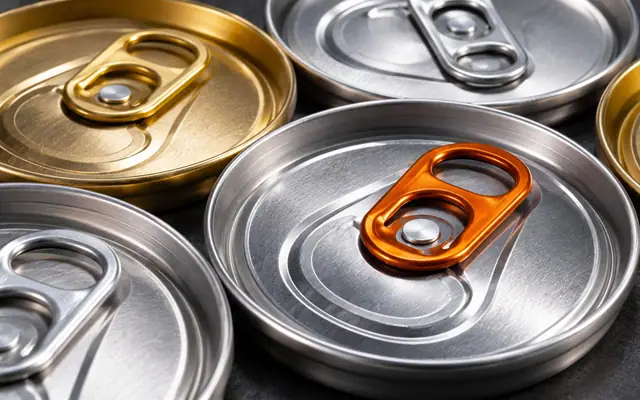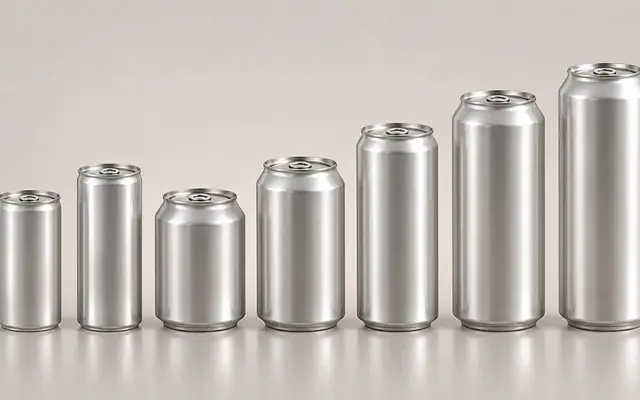
The four main aluminum beverage can formats are standard (66 mm diameter, 250–355 ml), sleek (58 mm, 250–355 ml), slim (53 mm, 185–250 ml) and tall (66 mm, 473–568 ml). Standard, sleek and tall cans use a 202 end; slim cans use a 200 end.
Why can size is a line decision, not just a design decision
Choosing a can size feels like a marketing decision, but it is first an engineering one. Your filler, seamer, conveyors and carriers are all set up for a specific body diameter, height and end size. Changing any of these usually means change parts, so it pays to choose the format before the artwork.
The body diameter is often described with a three-digit code in inches and sixteenths: 211 means 2 11/16 in (about 66 mm), 204 means 2 4/16 in (about 58 mm) and 202 means 2 2/16 in (about 53 mm). End sizes use the same system — a 202 end fits the necked-in top of a 211 can.
Aluminum can size chart
| Format | Volume | Diameter × height (nominal) | End |
|---|---|---|---|
| Slim | 185 ml | 53 × 100 mm | 200 |
| Slim | 250 ml (8.4 oz) | 53 × 134 mm | 200 |
| Standard stubby | 250 ml | 66 × 92 mm | 202 |
| Standard | 330 ml | 66 × 115 mm | 202 |
| Standard | 355 ml (12 oz) | 66 × 122 mm | 202 |
| Sleek | 330 ml | 58 × 146 mm | 202 |
| Sleek | 355 ml | 58 × 157 mm | 202 |
| Tall | 473 ml (16 oz) | 66 × 157 mm | 202 |
| Tall | 500 ml | 66 × 168 mm | 202 |
| Tall | 568 ml (pint) | 66 × 185 mm | 202 |
Dimensions are nominal and vary slightly between can makers. Always confirm the final drawing with your supplier and your filling line before ordering.
Standard cans (211 diameter)
The 330 ml and 355 ml standard can is the workhorse of the beverage industry — beer, soft drinks, sparkling water and juice. Most contract fillers can run it, carriers and trays are widely available, and it has the lowest cost per can of the common formats. See our standard aluminum cans.
Sleek cans (204 diameter)
Sleek cans are taller and narrower for the same volume. They signal “premium” in craft beer, cider, hard seltzer and RTD cocktails, and they still use a 202 end. The trade-off is that your filler needs sleek change parts. See sleek cans.
Slim cans (202 body, 200 neck)
The 250 ml slim can is the global energy-drink format. It is also popular for RTD coffee, functional shots and mixers. Slim cans use a smaller 200 end, which saves aluminum. See slim 250 ml cans.
Tall cans (473–568 ml and 1 L)
Tall-boys deliver the lowest packaging cost per litre and a large print canvas. 473 ml and 568 ml are standard for craft beer in North America and the UK, and 500 ml is common in Europe and Asia. See tall cans.
How to choose: a quick checklist
- Ask your filler first. Which diameters and heights can the line run today without change parts?
- Match the category. Energy drinks expect slim; craft beer favours 355/473 ml; seltzers favour sleek.
- Check the end. 200 ends for slim cans, 202 for standard, sleek and tall.
- Check secondary packaging. Carriers, trays and cartons are format-specific.
- Order samples. Blank samples let you run filling trials before committing to printed cans.
Not sure which format suits your line? Send us your filler model and we will recommend the right can and end.
Frequently asked questions
What size is a standard aluminum can?
A standard 330 ml can is about 66 mm in diameter and 115 mm tall; a 355 ml (12 oz) standard can is about 66 × 122 mm. Both use a 202 end.
What is the difference between a slim and a sleek can?
A slim can has a 53 mm body and a 200 end and is usually 185–250 ml. A sleek can has a 58 mm body, uses a 202 end and is usually 250–355 ml.